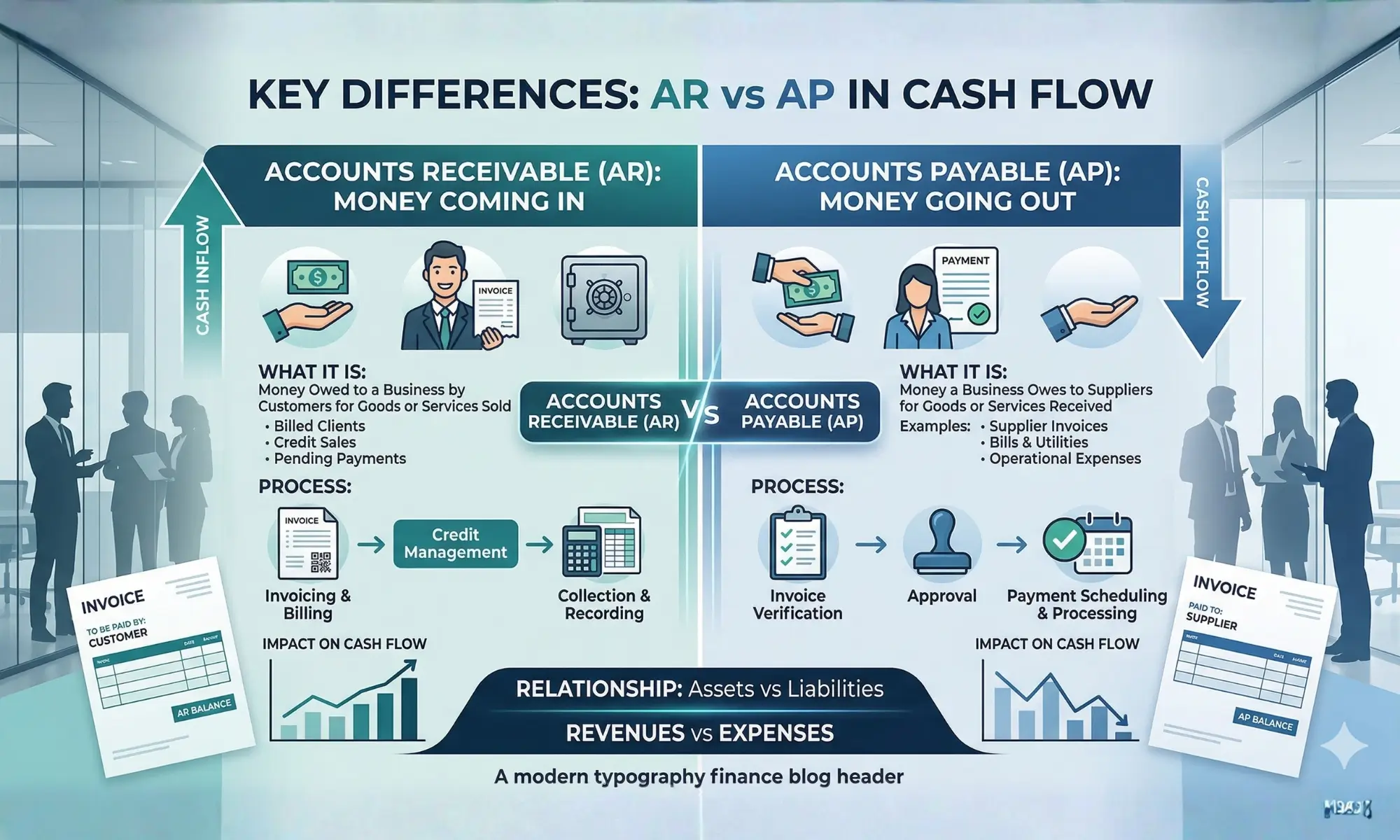
In the world of accounting, the terms AR and AP are used every day, yet many people still confuse them. AR stands for Accounts Receivable, while AP means Accounts Payable. Imagine a small business owner, Ali, who sells products on credit.
The money his customers owe him is called AR. At the same time, the money he owes to his suppliers is called AP. Understanding the difference between AR and AP helps Ali manage his business cash flow better.
For students, professionals, and business owners, knowing the difference between AR and AP is very important. It helps avoid financial mistakes and improves decision-making. The difference between AR and AP also plays a key role in financial reporting and budgeting.
In simple words, the difference between AR and AP tells us who owes money and who needs to be paid.
Key Difference Between AR and AP
- AR (Accounts Receivable): Money a business will receive from customers.
- AP (Accounts Payable): Money a business must pay to suppliers.
Why Their Difference Is Important
Knowing the difference between AR and AP is essential for learners and experts because it improves financial understanding. Businesses use AR to track incoming cash and AP to manage outgoing payments. This balance helps maintain a healthy economy. Without knowing the difference, companies may face cash shortages or mismanage funds. In society, proper financial tracking ensures stability, growth, and trust in business operations.
Pronunciation
- AR (US): /ˌeɪˈɑːr/ | (UK): /ˌeɪˈɑː/
- AP (US): /ˌeɪˈpiː/ | (UK): /ˌeɪˈpiː/
Now, let’s explore the detailed comparison to clearly understand the difference between AR and AP.
Difference Between AR and AP
1. Meaning
- AR: Money to be received.
- Example: A customer buys goods on credit.
- Example: A client delays payment for services.
- AP: Money to be paid.
- Example: A business buys raw materials on credit.
- Example: Payment due to a vendor.
2. Nature
- AR: Asset (benefit coming in).
- Example: Increases company value.
- Example: Shows expected income.
- AP: Liability (obligation going out).
- Example: Increases debts.
- Example: Shows financial responsibility.
3. Cash Flow Impact
- AR: Increases future cash inflow.
- Example: Customers paying later.
- Example: Subscription payments pending.
- AP: Decreases future cash.
- Example: Supplier invoices due.
- Example: Utility bills unpaid.
4. Accounting Entry
- AR: Recorded as debit.
- Example: Sale on credit.
- Example: Service billed.
- AP: Recorded as credit.
- Example: Purchase on credit.
- Example: Expense recorded.
5. Business Role
- AR: Helps track customer payments.
- Example: Credit sales monitoring.
- Example: Customer account tracking.
- AP: Helps manage supplier payments.
- Example: Vendor invoice tracking.
- Example: Payment scheduling.
6. Risk
- AR: Risk of non-payment.
- Example: Customer default.
- Example: Late payments.
- AP: Risk of penalties.
- Example: Late fee charges.
- Example: Supplier relationship damage.
7. Time Frame
- AR: Short-term asset.
- Example: Payment expected in 30 days.
- Example: Credit cycle tracking.
- AP: Short-term liability.
- Example: Payment due in 15 days.
- Example: Monthly bills.
8. Financial Statement
- AR: Appears under assets.
- Example: Balance sheet entry.
- Example: Current assets section.
- AP: Appears under liabilities.
- Example: Balance sheet entry.
- Example: Current liabilities section.
9. Purpose
- AR: Increase sales through credit.
- Example: Attract customers.
- Example: Boost revenue.
- AP: Maintain supply chain.
- Example: Keep vendors happy.
- Example: Ensure operations continue.
10. Control
- AR: Managed by credit policy.
- Example: Setting credit limits.
- Example: Payment reminders.
- AP: Managed by payment terms.
- Example: Negotiating deadlines.
- Example: Scheduling payments.
Nature and Behavior
- AR: Positive flow, growth-focused, but risky if unpaid.
- AP: Obligatory, controlled, ensures business continuity.
Why People Are Confused
Both involve money and appear in accounting records, so beginners often mix them up. The terms sound similar and are used together in financial discussions, causing confusion.
Comparison Table
| Feature | AR | AP | Similarity |
| Type | Asset | Liability | Both financial records |
| Direction | Incoming | Outgoing | Related to cash flow |
| Role | Customer payments | Supplier payments | Business operations |
| Risk | Non-payment | Penalties | Financial risk |
| Time | Short-term | Short-term | Current accounts |
Which Is Better in What Situation?
AR is better when a business wants to grow sales by offering credit to customers. It helps attract more buyers and increases revenue. However, too much AR can cause cash flow problems if payments are delayed.
AP is better for managing expenses and maintaining good relationships with suppliers. Proper AP management ensures smooth business operations. However, delaying AP too much can damage trust and lead to penalties.
Metaphors, Similes, and Connotations
- AR Metaphor: “AR is like seeds planted for future harvest.”
- AP Metaphor: “AP is like bills waiting at your door.”
Connotations:
- AR: Positive (growth), Neutral (pending money)
- AP: Negative (debt), Neutral (obligation)
Examples:
- “His AR is growing like a tree.”
- “AP feels like a weight on the shoulders.”
Idioms/Proverbs
- “A penny saved is a penny earned” (AP control).
- “Don’t count your chickens before they hatch” (AR uncertainty).
Works in Literature
- Accounting Basics – Educational, John Smith, 2018
- Financial Growth Guide – Business, Laura King, 2020
Movies Related to Finance Themes
- The Accountant – 2016, USA
- Margin Call – 2011, USA
FAQs
1. What is AR in simple words?
Money customers owe to a business.
2. What is AP?
Money a business owes to others.
3. Is AR good or bad?
Good for growth but risky if unpaid.
4. Is AP a liability?
Yes, it is a short-term liability.
5. Why are both important?
They help manage cash flow and business stability.
Usefulness for surroundings:
Both help businesses run smoothly, support the economy, and ensure financial transparency.
Conclusion
Understanding the difference between AR and AP is crucial for financial success. AR helps businesses grow by increasing sales, while AP ensures operations continue by managing payments.
Both play an essential role in maintaining balance in business finances. Whether you are a student, entrepreneur, or professional, knowing how AR and AP work will help you make smarter financial decisions and avoid costly mistakes.