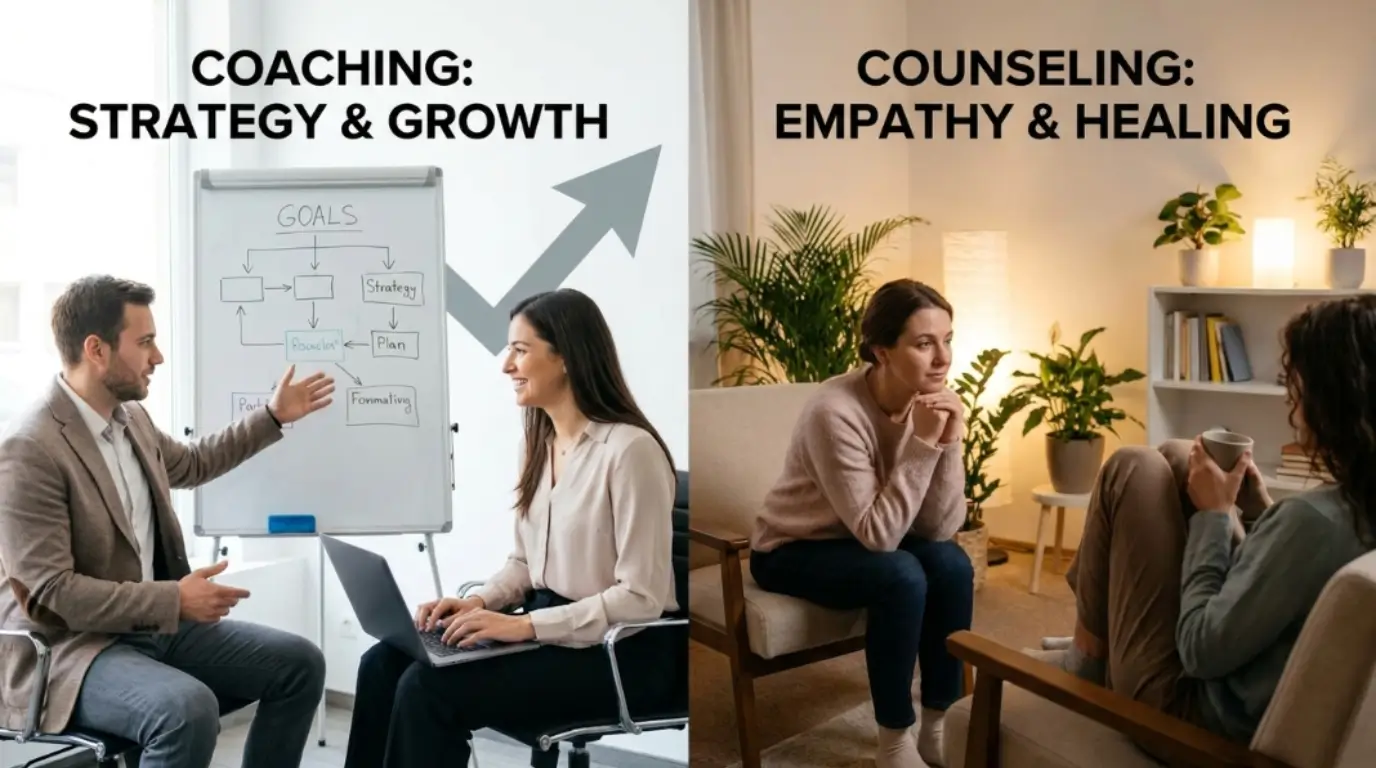
Imagine a young employee struggling at work. His manager suggests coaching to improve his performance. At the same time, he feels emotionally stressed and seeks counseling for personal support.
This simple real-life situation shows the difference between coaching and counseling. Both aim to help people grow, but they work in different ways.
The difference between coaching and counseling lies in their purpose, approach, and outcomes. Coaching focuses on goals, skills, and future success. Counseling focuses on emotions, healing, and past or present issues.
Understanding the difference between coaching and counseling helps individuals choose the right support at the right time.
In today’s fast-paced world, knowing the difference between coaching and counseling can improve both personal well-being and professional growth.
Key Difference Between Coaching and Counseling
The main difference is simple:
- Coaching is goal-oriented and future-focused.
- Counseling is emotion-focused and healing-oriented.
Why Understanding the Difference Matters
Knowing the difference between coaching and counseling is important for both learners and professionals. Students can choose the right guidance for career growth. Employees can improve performance through coaching. People facing stress or trauma can seek counseling for emotional support. In society, both play a key role. Coaching builds skills and success. Counseling builds mental health and stability. Together, they create balanced individuals and stronger communities.
Pronunciation
- Coaching
- US: /ˈkoʊ.tʃɪŋ/
- UK: /ˈkəʊ.tʃɪŋ/
- Counseling
- US: /ˈkaʊn.sə.lɪŋ/
- UK: /ˈkaʊn.səl.ɪŋ/
Now that you understand the basics, let’s explore the detailed difference between coaching and counseling.
Difference Between Coaching and Counseling (10 Points)
1. Purpose
- Coaching improves performance and skills.
- Example: A coach helps a manager lead better.
- Example: A student gets coaching to improve study habits.
- Counseling heals emotional or mental issues.
- Example: A person seeks counseling for anxiety.
- Example: Therapy after a loss.
2. Focus
- Coaching focuses on the future.
- Example: Career planning sessions.
- Example: Leadership growth plans.
- Counseling focuses on past and present.
- Example: Childhood trauma discussion.
- Example: Managing current depression.
3. Approach
- Coaching is structured and action-based.
- Example: Weekly goal tracking.
- Example: Skill-building exercises.
- Counseling is conversational and reflective.
- Example: Talking about feelings.
- Example: Exploring thoughts deeply.
4. Duration
- Coaching is short-term.
- Example: 3-month leadership program.
- Example: Exam preparation coaching.
- Counseling can be long-term.
- Example: Therapy over months.
- Example: Ongoing mental health support.
5. Professional Background
- Coaches may not need therapy training.
- Example: Business coach.
- Example: Life coach.
- Counselors are trained professionals.
- Example: Licensed therapist.
- Example: Clinical psychologist.
6. Problem Type
- Coaching deals with performance issues.
- Example: Time management problems.
- Example: Communication skills.
- Counseling deals with emotional issues.
- Example: Stress and trauma.
- Example: Relationship issues.
7. Relationship Style
- Coaching is like a partnership.
- Example: Coach and client set goals together.
- Example: Equal-level discussion.
- Counseling is more supportive and guided.
- Example: Counselor guides emotional healing.
- Example: Safe space for expression.
8. Techniques Used
- Coaching uses goal-setting tools.
- Example: SMART goals.
- Example: Action plans.
- Counseling uses therapeutic methods.
- Example: Cognitive Behavioral Therapy (CBT).
- Example: Talk therapy.
9. Outcome
- Coaching leads to achievement.
- Example: Promotion at work.
- Example: Improved productivity.
- Counseling leads to healing.
- Example: Reduced anxiety.
- Example: Better emotional balance.
10. Scope
- Coaching is limited to specific goals.
- Example: Career growth only.
- Example: Skill development.
- Counseling covers deeper life issues.
- Example: Identity struggles.
- Example: Mental health recovery.
Nature and Behaviour
Coaching is practical, structured, and forward-moving. It encourages action and growth.
Counseling is emotional, supportive, and reflective. It focuses on understanding and healing.
Why People Get Confused
People often confuse them because both involve talking and guidance. Both aim to improve life. However, their goals and methods are different. Coaching pushes forward. Counseling looks inward.
Table: Difference and Similarity
| Aspect | Coaching | Counseling | Similarity |
| Focus | Future goals | Emotional healing | Both help growth |
| Approach | Action-based | Discussion-based | Both involve guidance |
| Duration | Short-term | Long-term | Both require sessions |
| Outcome | Achievement | Healing | Both improve life |
Which is Better in What Situation?
Coaching is better when you want to improve skills, achieve goals, or grow in your career. It is ideal for students, professionals, and leaders who want success.
Counseling is better when you feel stressed, anxious, or emotionally disturbed. It helps you heal and understand yourself better. Both are useful, but the choice depends on your need.
Metaphors and Similes
- Coaching is like a compass guiding you forward.
- Counseling is like a mirror helping you see inside.
Connotative Meaning
- Coaching: Positive (growth, success)
- Example: “She got coaching and improved her career.”
- Counseling: Neutral to positive (healing, support)
- Example: “He took counseling to feel better.”
Idioms / Proverbs (Usage in Examples)
- “Practice makes perfect” (Coaching)
- Example: Coaching helps because practice makes perfect.
- “A problem shared is a problem halved” (Counseling)
- Example: Counseling works as a problem shared is a problem halved.
Works in Literature
- On Becoming a Person – Carl Rogers (Psychology, 1961)
- Co-Active Coaching – Henry Kimsey-House (Self-help, 1998)
- The Gift of Therapy – Irvin D. Yalom (Psychology, 2002)
Movies Related to Coaching and Counseling
- Good Will Hunting (1997, USA) – Counseling
- The King’s Speech (2010, UK) – Counseling/Coaching blend
- Coach Carter (2005, USA) – Coaching
FAQs
1. What is the main difference between coaching and counseling?
Coaching focuses on goals, while counseling focuses on emotional healing.
2. Can a person need both?
Yes, someone can take coaching for career and counseling for mental health.
3. Is coaching faster than counseling?
Yes, coaching is usually short-term and quicker.
4. Who should choose counseling?
People facing stress, trauma, or emotional issues.
5. Are both useful for society?
Yes, coaching builds success, and counseling builds mental health.
Conclusion
The difference between coaching and counseling is clear when you understand their purpose and approach.
Coaching helps you move forward and achieve goals. Counseling helps you heal and understand your emotions.
Both are powerful tools in today’s world. Choosing the right one depends on your situation. If you want growth, go for coaching. If you need healing, choose counseling. Together, they create a balanced and healthy life.