When people choose a health insurance plan, they often hear terms like POS and HMO and feel confused. Imagine a family visiting a hospital after an emergency and learning that their insurance only works with certain doctors.
This is where understanding the difference between POS and HMO becomes important. A POS plan, or Point of Service plan, gives members more flexibility when choosing doctors and specialists.
An HMO plan, or Health Maintenance Organization plan, focuses on lower costs and a fixed network of healthcare providers.
Knowing the difference between POS and HMO helps people make better healthcare choices for themselves and their families.
In today’s world, medical expenses are rising quickly, so understanding the difference between POS and HMO can save money, reduce stress, and improve access to healthcare services for everyone.
Key Difference Between POS and HMO
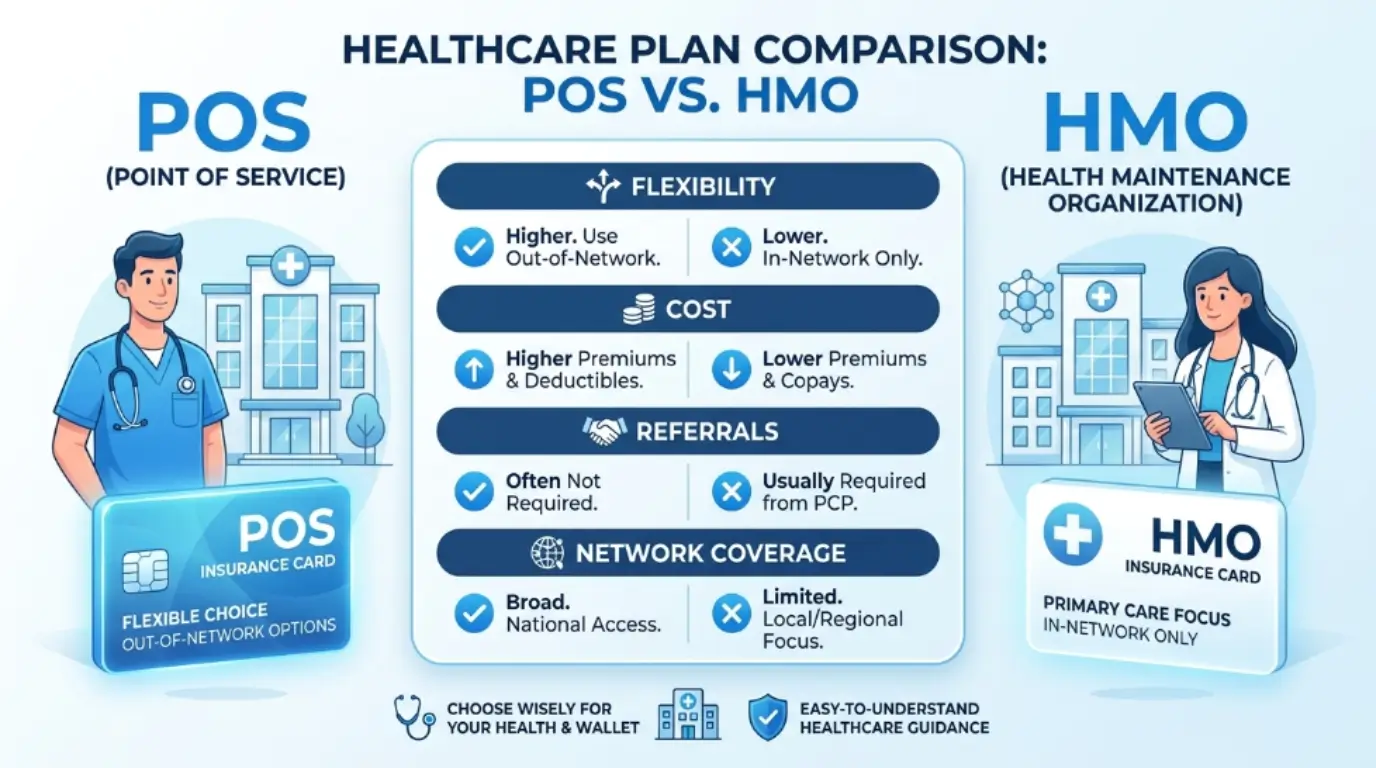
The main difference between POS and HMO is flexibility. A POS plan allows members to use doctors outside the network, but they usually pay more. An HMO plan mostly requires patients to stay within the provider network for coverage.
Another important difference is specialist care. In an HMO plan, patients usually need a referral from a primary care doctor before visiting a specialist. A POS plan also often requires referrals, but it provides more freedom in choosing healthcare providers.
Why Is Their Difference Important to Know?
Understanding the difference between POS and HMO is important for both learners and healthcare experts. Health insurance affects people’s lives every day. Choosing the wrong plan may lead to high medical bills or limited healthcare access.
For students and professionals in healthcare, learning about POS and HMO plans improves knowledge of the medical system. For families, understanding these plans helps them choose affordable healthcare options. In society, health insurance knowledge supports better financial planning and healthier communities.
Pronunciation of POS and HMO
POS Pronunciation
- US Pronunciation: “Pee-Oh-Ess”
- UK Pronunciation: “Pee-Oh-Ess”
HMO Pronunciation
- US Pronunciation: “Aitch-Em-Oh”
- UK Pronunciation: “Haych-Em-Oh”
Now that you understand the basics, let us explore the detailed difference between POS and HMO plans step by step.
Difference Between POS and HMO
1. Network Flexibility
POS:
POS plans allow patients to visit out-of-network doctors. However, extra costs may apply.
Examples:
- A patient visits a doctor outside the network and still receives partial coverage.
- A traveler uses a nearby clinic outside the network during vacation.
HMO:
HMO plans usually only cover doctors within the network.
Examples:
- A patient must visit approved network hospitals only.
- Insurance refuses payment for a non-network doctor visit.
2. Cost of Insurance
POS:
POS plans usually have higher monthly premiums because of flexibility.
Examples:
- A family pays more monthly for wider doctor options.
- Employees choose POS for broader healthcare access.
HMO:
HMO plans are often cheaper.
Examples:
- Students select HMO plans to save money.
- Employers offer HMO plans because they cost less.
3. Specialist Referrals
POS:
POS plans often require referrals for specialists.
Examples:
- A patient gets permission before seeing a heart doctor.
- A child visits a skin specialist after referral approval.
HMO:
HMO plans strongly depend on referrals.
Examples:
- Patients cannot visit specialists directly.
- A doctor referral is necessary for therapy treatment.
4. Primary Care Doctor Requirement
POS:
Members usually choose a primary care physician.
Examples:
- A family doctor manages regular checkups.
- The doctor guides patients toward specialists.
HMO:
Choosing a primary doctor is mandatory.
Examples:
- Every patient must register with one doctor.
- The doctor coordinates all treatments.
5. Out-of-Network Coverage
POS:
POS offers partial coverage outside the network.
Examples:
- Emergency treatment outside the network is partly paid.
- Patients receive reimbursement after submitting claims.
HMO:
HMO rarely covers out-of-network services.
Examples:
- Insurance rejects most outside hospital visits.
- Patients pay full costs without approval.
6. Paperwork
POS:
POS plans involve more paperwork.
Examples:
- Patients submit reimbursement forms.
- Claims processing takes extra time.
HMO:
HMO plans have simpler paperwork.
Examples:
- Network hospitals directly handle claims.
- Members enjoy easier billing processes.
7. Freedom of Choice
POS:
POS gives more freedom in choosing providers.
Examples:
- Patients select preferred doctors freely.
- Families access specialists in different cities.
HMO:
HMO offers limited choices.
Examples:
- Patients use approved hospitals only.
- Insurance company controls provider options.
8. Emergency Care
POS:
POS provides broader emergency coverage.
Examples:
- Travelers receive emergency support nationwide.
- Emergency surgery costs are partly covered.
HMO:
HMO emergency care depends on plan rules.
Examples:
- Coverage works mainly within network regions.
- Non-approved emergency visits may cost more.
9. Monthly Premiums
POS:
Higher premiums are common.
Examples:
- Business owners pay more for flexibility.
- Families prefer POS despite extra cost.
HMO:
Lower premiums attract budget-conscious users.
Examples:
- Young workers select cheaper HMO plans.
- College students save money with HMO coverage.
10. Best For
POS:
Best for people needing flexible healthcare.
Examples:
- Frequent travelers choose POS plans.
- Patients with chronic illnesses prefer specialist access.
HMO:
Best for people wanting affordable healthcare.
Examples:
- Healthy individuals choose low-cost HMOs.
- Small families use HMO plans for basic care.
Nature and Behaviour of POS and HMO
POS plans are flexible, adaptable, and patient-focused. They balance affordability with provider freedom. People who value healthcare choices often prefer POS plans.
HMO plans are structured, cost-efficient, and network-focused. They encourage preventive care and controlled healthcare spending. People who want predictable costs usually select HMO plans.
Why Are People Confused About Their Use?
Many people confuse POS and HMO because both require primary care doctors and referrals. Their healthcare structures look similar at first glance.
Another reason is insurance terminology. Terms like network providers, referrals, premiums, and deductibles can confuse beginners. Since both plans aim to reduce healthcare costs, many users assume they work the same way.
Table Showing Difference and Similarity Between POS and HMO
| Feature | POS | HMO | Similarity |
| Full Form | Point of Service | Health Maintenance Organization | Both are insurance plans |
| Flexibility | High | Limited | Both use provider networks |
| Out-of-Network Care | Allowed partly | Rarely allowed | Both reduce healthcare costs |
| Specialist Access | Referral needed | Referral required | Both involve primary doctors |
| Monthly Cost | Higher | Lower | Both require premiums |
| Paperwork | More paperwork | Less paperwork | Both manage claims |
| Doctor Choice | More freedom | Limited options | Both support preventive care |
| Emergency Care | Wider coverage | Limited rules | Both provide emergency support |
| Best For | Flexible healthcare | Affordable healthcare | Both protect medical expenses |
Which Is Better in What Situation?
A POS plan is better for people who travel often, need specialist care, or want flexibility in choosing doctors. It is also useful for patients with long-term medical conditions because they may need treatment outside their provider network.
An HMO plan is better for people who want affordable healthcare and simple insurance management. Families with fewer medical needs often choose HMOs because they offer lower monthly premiums and predictable healthcare costs.
How POS and HMO Are Used in Metaphors and Similes
POS Metaphors and Similes
- “A POS plan is like an open road because it gives freedom of movement.”
- “Choosing POS is like carrying a flexible travel pass.”
HMO Metaphors and Similes
- “An HMO works like a school system with fixed rules.”
- “Choosing HMO is like staying inside a secure fence.”
Connotative Meaning of POS and HMO
POS Connotation
- Positive: Flexible, broad, convenient
- Negative: Expensive, complicated
- Neutral: Balanced healthcare option
Examples:
- “POS insurance gave her freedom to choose doctors.”
- “The POS plan cost more than expected.”
HMO Connotation
- Positive: Affordable, organized, reliable
- Negative: Restrictive, limited
- Neutral: Structured healthcare system
Examples:
- “The HMO helped the family save money.”
- “The HMO rules felt too strict for some patients.”
Idioms or Proverbs Related to Healthcare Plans
POS Examples
- “Freedom comes with a price.”
- “More choices bring more responsibility.”
HMO Examples
- “Stay within the lines.”
- “Prevention is better than cure.”
Works in Literature Related to Healthcare and Insurance
POS Related Works
- An American Sickness — Non-fiction, Elisabeth Rosenthal, 2017
- The Healing of America — Non-fiction, T. R. Reid, 2009
HMO Related Works
- The Social Transformation of American Medicine — Non-fiction, Paul Starr, 1982
- Critical Condition — Medical Thriller, Robin Cook, 1986
Movies Related to Healthcare Systems
- Sicko — 2007, USA
- John Q — 2002, USA
- Patch Adams — 1998, USA
- The Doctor — 1991, USA
Frequently Asked Questions About POS and HMO
1. What does POS mean in health insurance?
POS stands for Point of Service. It combines features of HMO and PPO insurance plans.
2. What does HMO mean?
HMO stands for Health Maintenance Organization. It provides healthcare through a network of approved doctors and hospitals.
3. Is POS more expensive than HMO?
Yes, POS plans usually cost more because they offer greater flexibility.
4. Which plan is better for families?
HMO is better for budget-focused families, while POS is better for families needing specialist access.
5. Can I use out-of-network doctors with HMO?
Usually no, except during emergencies or approved situations.
How Both Are Useful for Surroundings
POS and HMO plans both improve public healthcare systems. They help hospitals manage patient care and reduce financial pressure on families. POS plans encourage flexibility and specialized treatment, while HMO plans support affordable healthcare access. Together, these insurance systems create healthier communities and improve healthcare organization in society.
Final Words on POS and HMO
Understanding the difference between POS and HMO is important for making smart healthcare decisions.
POS plans provide flexibility and broader provider choices, while HMO plans focus on affordability and organized healthcare networks.
Both insurance systems serve different needs and lifestyles. People who need specialist access and freedom may prefer POS plans, while those seeking lower costs often choose HMOs.
Learning about these plans helps individuals avoid confusion, save money, and access better medical care.
In the modern healthcare world, knowledge about POS and HMO plans is valuable for students, professionals, and families alike.