Imagine getting a tooth pulled at the dentist or using a numbing cream before a minor skin treatment. Most people do not think about the medicine behind that painless moment.
Yet two common anesthetics, benzocaine and lidocaine, quietly play a huge role in everyday healthcare. The difference between benzocaine and lidocaine matters because both drugs numb pain in different ways and are used for different medical situations.
Many patients, students, and even beginners in medicine confuse them because they belong to the same family of local anesthetics.
However, the difference between benzocaine and lidocaine becomes important when choosing safe and effective pain relief.
Understanding the difference between benzocaine and lidocaine can help people avoid misuse, allergic reactions, and treatment mistakes.
This guide explains the topic in simple words so both learners and experts can understand it clearly.
Key Difference Between Benzocaine and Lidocaine
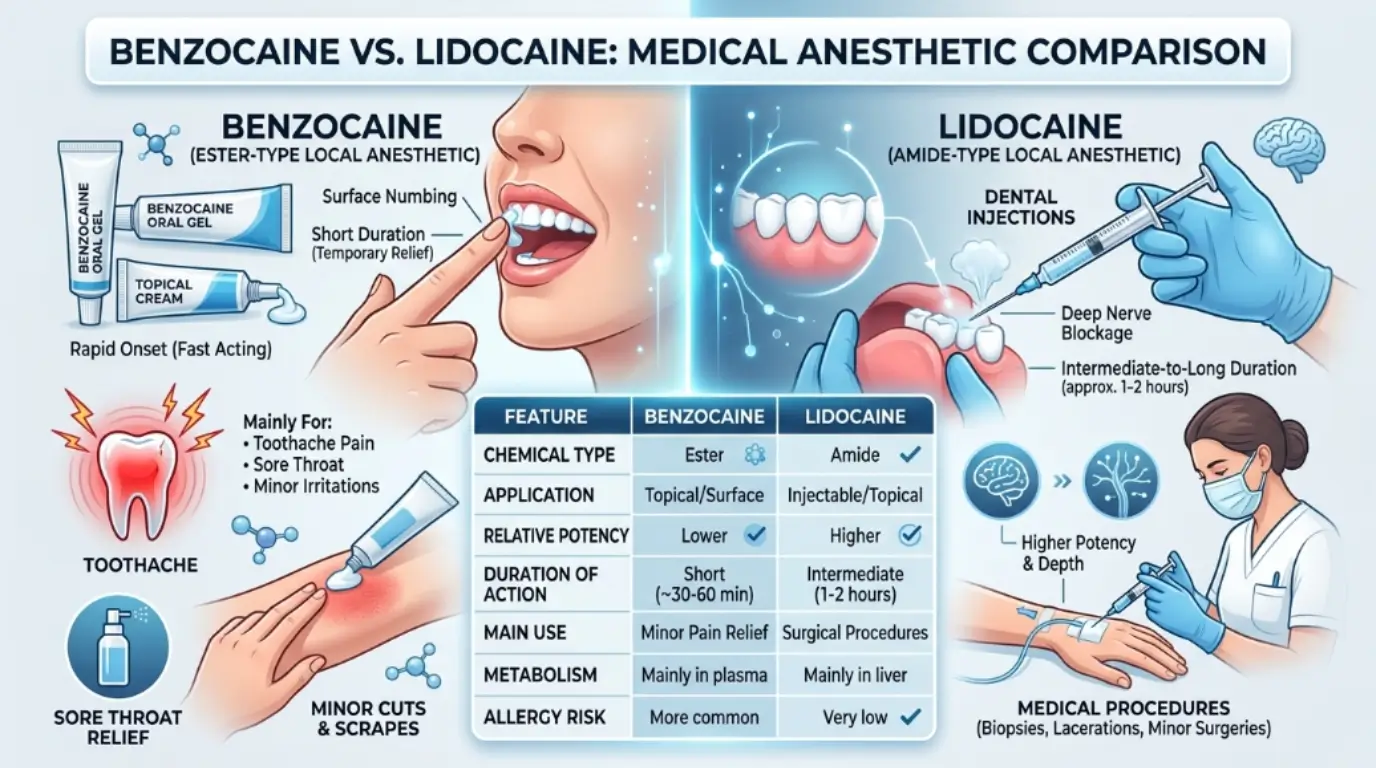
The main difference is that benzocaine is usually used only on the surface of the skin or mouth, while lidocaine can be used both on the surface and through injections. Benzocaine acts quickly for minor pain relief, but lidocaine is stronger and lasts longer. Lidocaine is commonly used in hospitals and dental clinics, while benzocaine is often found in over-the-counter gels and sprays.
Why Is Their Difference Necessary to Know?
Knowing the difference between benzocaine and lidocaine is important because these medicines affect human health directly. Doctors and nurses need the right anesthetic for safe treatment. Students learning medicine must understand their uses to avoid confusion in practice. Patients also benefit because they can choose safer products for toothaches, burns, or skin irritation.
In society, these anesthetics reduce pain during medical procedures and improve patient comfort. Their correct use helps healthcare systems work more safely and efficiently.
Pronunciation of Both Words
Benzocaine
- US Pronunciation: ben-ZOE-kane
- UK Pronunciation: BEN-zoh-kayn
Lidocaine
- US Pronunciation: LYE-doe-kane
- UK Pronunciation: LID-oh-kayn
Before exploring the detailed comparison, let us look closely at how these two anesthetics differ in real-life use.
Difference Between Benzocaine and Lidocaine
1. Chemical Structure
Benzocaine:
Benzocaine belongs to the ester anesthetic group.
Examples:
- Benzocaine oral gel
- Benzocaine throat spray
Lidocaine:
Lidocaine belongs to the amide anesthetic group.
Examples:
- Lidocaine injection
- Lidocaine patch
2. Method of Use
Benzocaine:
Usually applied only on skin or mouth surfaces.
Examples:
- Toothache gel
- Mouth ulcer cream
Lidocaine:
Can be applied on skin or injected into the body.
Examples:
- Dental injection
- Surgical numbing cream
3. Strength
Benzocaine:
Milder and suitable for small pain relief.
Examples:
- Sore throat lozenges
- Minor gum pain gel
Lidocaine:
Stronger and useful for medical procedures.
Examples:
- Minor surgery anesthesia
- Tattoo numbing cream
4. Duration
Benzocaine:
Works for a short time.
Examples:
- Temporary mouth pain relief
- Quick burn relief spray
Lidocaine:
Lasts longer than benzocaine.
Examples:
- Long dental procedure
- Extended skin numbing
5. Availability
Benzocaine:
Mostly sold over the counter.
Examples:
- Teething gel
- Oral pain products
Lidocaine:
Often requires medical supervision.
Examples:
- Hospital injections
- Prescription patches
6. Risk of Allergy
Benzocaine:
Higher chance of allergic reactions.
Examples:
- Skin rash
- Swelling in mouth
Lidocaine:
Lower allergy risk for most people.
Examples:
- Safe dental anesthesia
- Controlled medical use
7. Medical Applications
Benzocaine:
Used mainly for minor discomfort.
Examples:
- Canker sore relief
- Tooth pain gel
Lidocaine:
Used in advanced medical treatments.
Examples:
- Surgical procedures
- Heart rhythm treatment
8. Absorption in Body
Benzocaine:
Absorbs slowly into the bloodstream.
Examples:
- Surface-only numbing
- Oral gel application
Lidocaine:
Absorbs more effectively into tissues.
Examples:
- Injectable anesthesia
- Nerve block treatments
9. Side Effects
Benzocaine:
May cause methemoglobinemia in rare cases.
Examples:
- Breathing difficulty
- Blue-colored skin
Lidocaine:
May affect the nervous system if overdosed.
Examples:
- Dizziness
- Irregular heartbeat
10. Cost and Accessibility
Benzocaine:
Usually cheaper and easier to buy.
Examples:
- Drugstore pain gel
- Affordable sprays
Lidocaine:
More expensive because of medical-grade use.
Examples:
- Prescription creams
- Hospital anesthetics
Nature and Behaviour of Both
Benzocaine
Benzocaine behaves as a quick surface anesthetic. It is simple, fast-acting, and useful for mild pain. Because it is commonly found in everyday products, people see it as a convenient solution.
Lidocaine
Lidocaine behaves as a versatile and powerful anesthetic. It works deeply in tissues and is trusted in professional medicine. Its effects are stronger and more controlled.
Why Are People Confused About Their Use?
People often confuse benzocaine and lidocaine because both numb pain and have similar names ending in “-caine.” They are also found in creams, sprays, and dental products. Many users think they are interchangeable, but their strength, safety, and medical uses are different.
Difference and Similarity Table
| Feature | Benzocaine | Lidocaine | Similarity |
| Drug Type | Ester anesthetic | Amide anesthetic | Both are local anesthetics |
| Strength | Mild | Stronger | Both reduce pain |
| Usage | Surface only | Surface and injection | Both numb tissues |
| Duration | Short | Longer | Both act quickly |
| Availability | Over the counter | Often prescription-based | Both used medically |
| Allergy Risk | Higher | Lower | Both can cause side effects |
| Common Use | Toothaches | Surgery and dental work | Both used in healthcare |
Which Is Better in What Situation?
Benzocaine
Benzocaine is better for small and temporary pain problems. It works well for mouth ulcers, sore gums, and throat irritation. Because it is easy to buy, many people use it at home for quick relief.
Lidocaine
Lidocaine is better for serious medical or dental procedures. Doctors prefer it because it lasts longer and numbs deeper tissues. It is also useful in surgeries, injections, and long treatments where stronger pain control is needed.
How the Keywords Are Used in Metaphors and Similes
Benzocaine
- “Her comforting words were like benzocaine on emotional pain.”
- “The joke worked like benzocaine, easing the tension quickly.”
Lidocaine
- “His calm voice spread through the room like lidocaine before surgery.”
- “The teacher’s explanation was as effective as lidocaine in removing confusion.”
Connotative Meaning of Both Words
Benzocaine
- Positive: Quick relief, comfort
- Negative: Weak temporary fix
- Neutral: Surface anesthetic medicine
Example:
“Benzocaine gave quick comfort before the dentist visit.”
Lidocaine
- Positive: Strong medical support
- Negative: Serious medical association
- Neutral: Long-lasting anesthetic drug
Example:
“Lidocaine helped the patient stay calm during surgery.”
Idioms or Proverbs Related to the Words
Although no famous idioms directly use these medical words, they can fit modern expressions:
- “A little lidocaine for the pain of life.”
- “Benzocaine solutions do not fix deep problems.”
Examples:
- “His apology was only benzocaine for the real issue.”
- “Good leadership acts like lidocaine during crisis.”
Works in Literature Mentioning the Keywords
Benzocaine
- Medical Pharmacology — Katzung (Medical Textbook, 2018)
- Essentials of Dental Care — Gordon Emmerson (Educational, 2019)
Lidocaine
- Clinical Anesthesia — Paul Barash (Medical Reference, 2017)
- Pharmacology for Nurses — Michael Adams (Healthcare Education, 2020)
Movies Mentioning the Keywords
Benzocaine
- Novocaine (2001, USA)
Lidocaine
- Awake (2007, USA)
- Flatliners (1990, USA)
Frequently Asked Questions
1. Is benzocaine stronger than lidocaine?
No. Lidocaine is generally stronger and lasts longer.
2. Can benzocaine and lidocaine be used together?
Sometimes doctors may combine them, but medical advice is necessary.
3. Which one is safer for children?
Doctors are usually more careful with benzocaine in children because of rare blood-related side effects.
4. Why do dentists prefer lidocaine?
Dentists prefer lidocaine because it provides deep and long-lasting numbness.
5. Are both medicines useful in daily life?
Yes. Both help reduce pain and improve comfort during medical and dental care.
How Both Are Useful for Surroundings
Benzocaine and lidocaine improve healthcare by reducing pain and stress during treatments. They help doctors perform procedures smoothly and allow patients to recover more comfortably. These anesthetics also support public health because painless treatment encourages people to seek medical care without fear.
Final Words for Both
The difference between benzocaine and lidocaine is more than just medical terminology. Both medicines serve important roles in pain relief, but their uses, strength, and safety levels are different.
Benzocaine is ideal for quick and mild surface pain, while lidocaine provides stronger and longer-lasting anesthesia for professional healthcare settings.
Understanding their differences helps patients, students, and healthcare workers make safer decisions. Even though they belong to the same anesthetic family, each has unique advantages in different situations.
Learning about the difference between benzocaine and lidocaine not only improves medical knowledge but also helps people appreciate the science that makes modern treatments more comfortable and effective.